The International Energy Agency’s 2026 update projects global data-center electricity consumption rising from 485 terawatt-hours in 2025 to about 950 terawatt-hours in 2030. The report places the expansion alongside bottlenecks in energy equipment, computing components and finance. The numbers describe an outlook for all data centers, not a meter reading for autonomous AI alone and not a guarantee that every proposed campus will be built.
That distinction is easy to lose when AI infrastructure becomes a story about ever larger projects. An announced campus is a plan. An interconnection request is a request. A forecast is a model of what may happen under stated assumptions. Actual electricity consumption is an observed quantity. Treating them as interchangeable can exaggerate some developments and conceal others.
Geography changes the meaning of the number
Berkeley Lab’s earlier US analysis estimated data-center consumption at 176 terawatt-hours in 2023 and set out a range of 325 to 580 terawatt-hours for 2028. Its explanation explicitly presents a range, reflecting uncertainty about future growth. Those figures concern the United States and a different period from the IEA’s global update, so putting them on one chart requires careful labeling.
A national total can also obscure a local constraint. A new computing load may be modest compared with the country’s annual consumption while being very large relative to the network serving a particular town. The equipment required to connect that load is built in specific places. National energy sufficiency does not establish that a local substation or transmission path is ready.
Power and energy are different measurements
Power describes the rate of consumption at a moment; energy describes consumption over time. A facility’s megawatt capacity does not reveal its annual electricity use without an assumption about how much of that capacity operates and for how long. A proposed maximum demand should not be presented as continuous operation unless that is genuinely the project’s operating expectation.
Autonomous AI makes those assumptions especially important because the workload mix is changing. A service answering short questions may use resources differently from one running lengthy coding or research tasks. Simulation, training and interactive work can also have different schedules. A forecast that gets the number of users right can still miss consumption if the work each user asks the system to perform changes substantially.
Company reports provide a different view
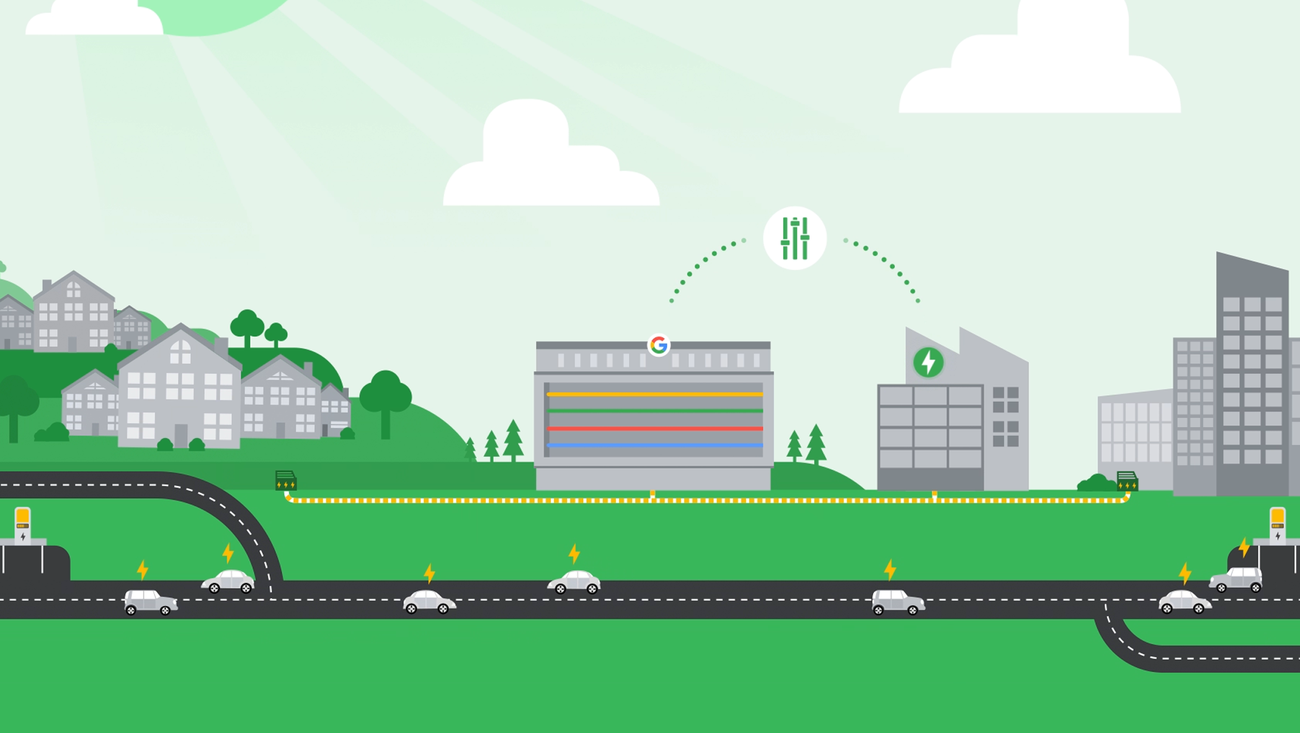
Google’s 2026 Environmental Report overview reported a 37 percent annual increase in electricity demand and a two percent reduction in operational emissions. Those are company-reported results for a defined reporting boundary. They illustrate why electricity and emissions should be discussed separately: changes in procurement and supply can affect one measure differently from the other.
The figures do not establish that every additional AI task has become cleaner, nor that all electricity was matched with local clean generation at every hour. A reader needs the underlying methodology, including which operations are included and how energy purchases are accounted for. Clear boundaries make a corporate report more useful than a headline that collapses several measures into one environmental score.
The supply chain determines what can happen soon
The Department of Energy’s supply-chain work points toward another reason to treat forecasts as conditional: energy infrastructure relies on manufactured equipment and project delivery. Even a strong commercial case does not instantly produce the components, approvals and trained workforce required to connect a new load. Computing demand can change more quickly than the physical systems serving it.
For an investor, that creates different exposures along the chain. A chip company, an electrical-equipment supplier and a data-center landlord may all benefit from the same broad trend while facing different delivery schedules and risks. A forecast of electricity growth cannot be converted directly into a forecast of revenue for each one. The contractual and physical bottlenecks need separate examination.
Better reporting would make the buildout easier to judge
An infrastructure announcement should state proposed capacity, the portion contracted, the portion connected and the portion actually operating. It should identify whether a figure concerns computing equipment alone or the whole facility. Where a project is being delivered in phases, the dates and dependencies for those phases matter more than the largest number in the long-term plan.
The same discipline helps policymakers. Planning for a high-growth scenario can be prudent without claiming that the scenario is inevitable. Agreements can protect other customers if a large proposed load fails to arrive, while allowing timely construction when demand is credible. A transparent range provides room for those decisions; a falsely precise forecast encourages an argument over one number.
The Berkeley Lab range also translates into a range for the share of US electricity consumed by data centers: about 6.7 to 12 percent in 2028, compared with an estimated 4.4 percent in 2023. The share depends on what happens elsewhere in the economy as well as inside data centers. That is an important reminder that even a percentage can contain several moving assumptions. A rising share may reflect faster computing growth, slower growth in other uses, or both. The underlying energy quantities and scenario assumptions should remain available beside the percentage in any serious account of the trend.
The IEA’s outlook deserves attention because it connects computing ambition with the systems required to supply it. Its value is not a promise that the world will consume exactly the projected amount. It is a framework for asking what would have to be true for that growth to occur. For autonomous AI, the central uncertainty remains both physical and economic: how much useful work customers will demand, and how efficiently the infrastructure can deliver it.
Sources & evidence
This archive preserves its original editorial date. Sources describe the events and announcements discussed; they do not establish today’s status.