NVIDIA used its March 2026 Vera Rubin announcement to describe a platform spanning seven chips and several types of rack. The pitch reaches beyond faster model calculations: it includes the infrastructure for agents that use tools, run tests and carry work through several stages. The announcement makes an increasingly important point visible. An AI infrastructure upgrade is becoming a coordinated change to a service, not a simple replacement of one processor.
That matters to a company whose customers depend on an agent finishing work every day. The new equipment may offer compelling performance, but moving an application introduces a different set of questions. Can the software reproduce its previous behavior? Are the surrounding services ready? Can the old system remain available until the new one has proved itself under ordinary demand?
The application does not move by itself
A model is only one part of an operational agent. Retrieval, permissions, tool execution, logging and customer-facing interfaces surround it. Some of those components run on CPUs or separate services, and their delays may dominate once model inference becomes faster. Accelerating the model can therefore expose a slow database or an overloaded tool service that previously attracted little attention.
The migration plan should follow the entire task from arrival to completion. It should record which components change, which remain on the old platform, and where data crosses between them. A successful model benchmark is useful evidence, but it cannot show whether an employee receives the right answer with the right supporting records after the application has been moved.
The building is part of the platform
NVIDIA’s hardware guide describes liquid-cooling arrangements and leak detection for DGX Vera Rubin systems. Those details belong in the procurement discussion because the facility must support the equipment before an application can use it. Delivery to a loading bay and acceptance into production are separate milestones, with different owners and different risks.
The practical review includes power distribution, cooling connections, maintenance access and the process for isolating a failed component. It should be done with the people responsible for the building, not left entirely to the team selecting accelerators. A delay in a shared facility system can leave many expensive machines waiting together, even when each server is technically ready.
Software gains complicate the comparison
MLCommons’ September 2026 results analysis identifies both new hardware and software improvements as contributors to changing inference performance. That complicates a familiar sales comparison: a new system tested with current software against an older system tested with an earlier stack. Some of the apparent generational advantage may be available without replacing the hardware.
A disciplined buyer asks for two comparisons. One evaluates the proposed production configuration against the system operating today. The other updates the existing platform as far as reasonably possible. The first shows the total benefit of change; the second helps isolate how much benefit requires capital spending. Both are relevant, and neither should be substituted for the other without explanation.
Parallel operation has a purpose
An initial deployment should handle a limited, observable share of work. It can replay representative historical tasks, then accept selected live traffic with a clear path back to the previous service. The point is not to keep two installations indefinitely. It is to separate failures caused by the migration from failures already present in the application.
For autonomous workflows, the comparison must include actions as well as answers. A small difference in a generated plan can cause a different tool call, which then changes the information available at the next step. Testing only the final text may miss that divergence. Logs should preserve the sequence of decisions sufficiently well for an engineer to explain why two runs behaved differently.
Availability is not a service guarantee
NVIDIA’s product overview describes the intended platform and workloads. Customers still need a delivery schedule for their own configuration, support terms and a definition of acceptance. A broad availability announcement does not establish when a particular organization can operate a fully commissioned installation or obtain replacement parts in its region.
The economic case also needs to include overlap. Running old and new systems together, retraining operators and rebuilding deployment pipelines are real migration costs. Ignoring them can make a project appear to pay for itself before the organization has even stopped paying for its previous infrastructure. The correct comparison follows cash and useful output through the transition period.
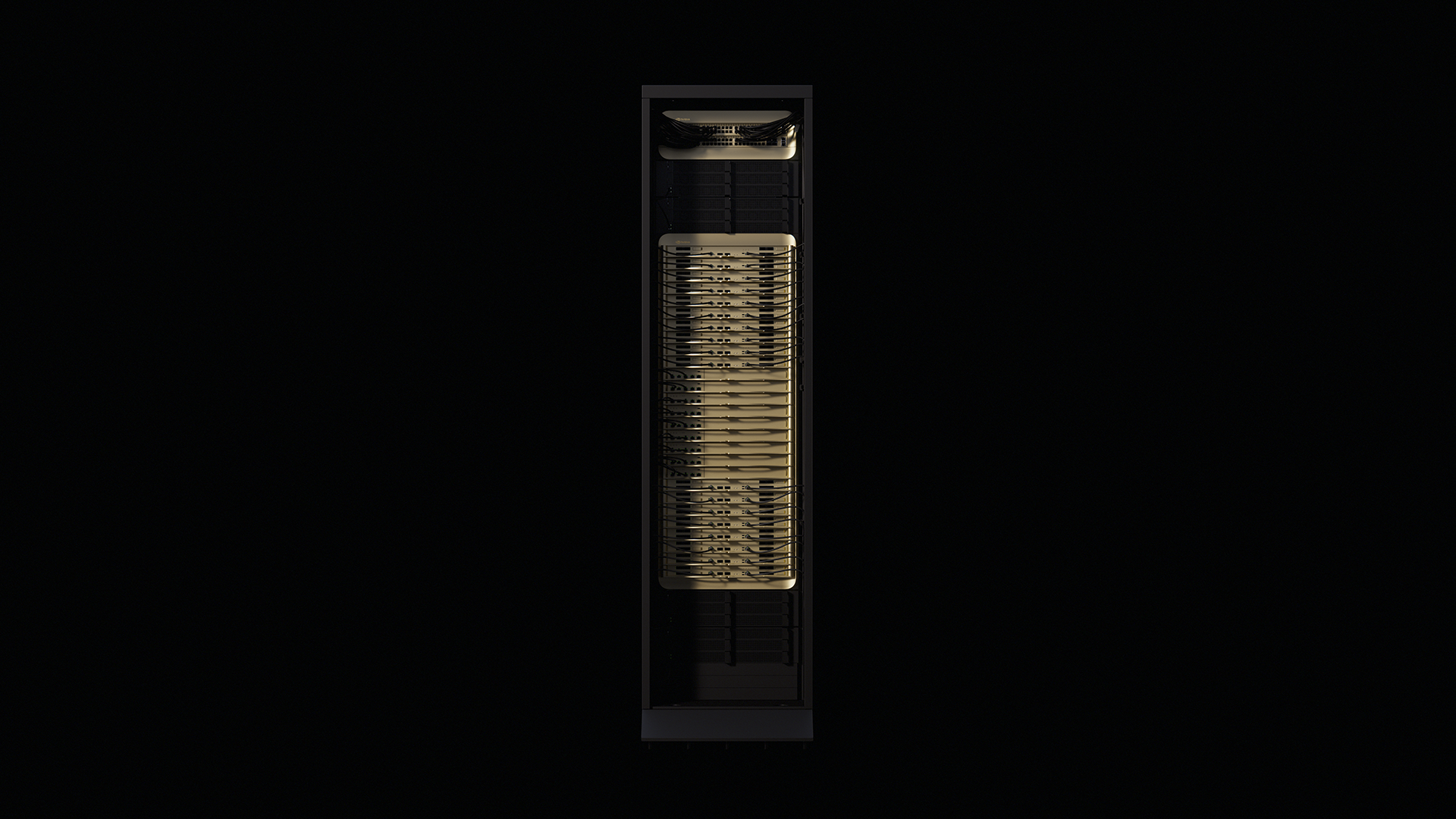
The NVL72 configuration described in the March announcement combines 72 Rubin GPUs and 36 Vera CPUs. NVIDIA also describes a separate CPU rack for the environments that agents use to test and validate model-generated work. That makes the migration more specific than a general claim about more AI power. An organization must decide how much capacity to allocate to generating proposals and how much to checking or executing them. If the validation stage cannot keep pace, faster generation can produce a larger queue rather than a more productive autonomous service. The architecture should reflect the balance of the actual workload.
The strongest case for Rubin is therefore not that newer hardware automatically makes an agent autonomous. It is that a coordinated platform may let an organization run more demanding workflows within an acceptable cost and response time. That case becomes credible when the rollout plan connects component delivery, facility readiness, software validation and customer outcomes. Until then, the specification is a promise about ingredients, while the business still needs a working service.
Sources & evidence
This archive preserves its original editorial date. Sources describe the events and announcements discussed; they do not establish today’s status.