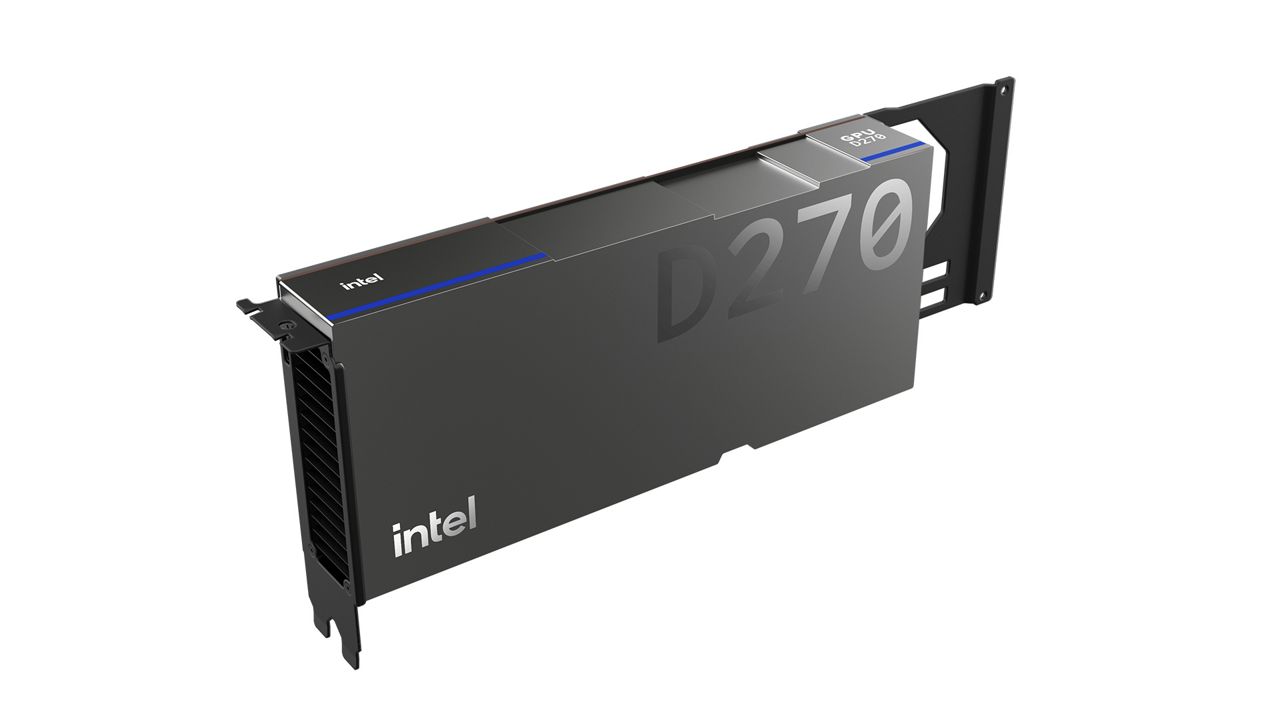
Longer prompts and concurrent AI sessions consume memory as well as arithmetic. Intel’s October OCP announcement puts that constraint at the center of its GPU D-series: the company specifies up to 480GB of LPDDR5X memory, 1.5TB/s of memory bandwidth and 1.3 petaflops of peak FP8 compute.
Current impact
Those are component specifications, not measured application throughput. The immediate change is a more concrete alternative for teams evaluating memory-intensive inference. A larger memory pool can reduce the need to divide a model across devices, but software compatibility, scheduling and the workload’s access pattern determine whether that becomes a practical advantage.
Potential greater impact
If production systems preserve that advantage under concurrent use, operators could gain another hardware option for long-context services. That could improve purchasing flexibility and reduce dependence on one accelerator stack. It does not establish a lower price per completed task today.
What would establish progress
The decisive evidence will be available production systems tested with disclosed models, context lengths, concurrency and power consumption. Compare latency and accepted output against the full server and software cost, rather than treating peak FP8 performance as a customer result.
Image: Intel / official announcement. Used for source-attributed editorial reporting; rights remain with the owner.
Sources & evidence
Sources describe the announcements and evidence available when this analysis was published. Company claims are attributed; plans and trials are not treated as sustained operation.